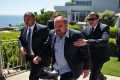
Security detail stops alleged trespasser on Vice President Kamala Harris’ Malibu property, prompting new questions about protection at top officials’ homes
0 View

- Publish Date:
- 14 September, 2026
- Category:
- Sports
- Video License
- Standard License
- Imported From:
- Youtube
A trespasser was stopped on Vice President Kamala Harris’ Malibu property Friday night, Sept. 11, 2026, according to Harris’ spokesperson and the Los Angeles County Sheriff’s Department. The woman was intercepted by private security before reaching the residence and left voluntarily after deputies advised her to leave, officials said.
Vice President Kamala Harris and her husband, Second Gentleman Doug Emhoff, were not at their Malibu residence when the trespassing incident occurred, Harris’ spokesperson Eduardo Negrón confirmed. Deputies arrived to find the woman already stopped outside the property by private security personnel, according to sheriff’s officials and Negrón.
The Los Angeles County Malibu/Lost Hills Sheriff’s Station received a call about a suspicious person at approximately 10:30 p.m. on Friday, Sept. 11, 2026.
The unidentified woman, who reportedly arrived at the property via Uber, initially approached the gate and was told by security she could not stay or enter. After leaving, she returned a second time, prompting the security team to contact law enforcement. Deputies advised the woman to leave the premises, and she departed voluntarily without incident. No arrest was made, but a trespassing report was filed, and the incident is being treated as a non-criminal, non-violent trespass, officials said. There have been no public reports of weapons, threats, or prior history involving the woman and the vice president.
Lt. Jason Duron, watch commander at the Malibu/Lost Hills station, said deputies have increased patrols around the property to maintain security and will continue monitoring the location. The Malibu residence is a four-bedroom, oceanfront home valued at approximately $8 million, situated in a secluded enclave, according to real estate records and local reports. Private security is posted on-site, and it was this detail that first intercepted the trespasser before she reached the house.
Following the incident, the security team escalated the response by involving local law enforcement when the woman returned to the property. The arrangement underscores the layered security approach at Harris’ residence, which combines private security, local police, and state agencies. Harris and Emhoff maintain multiple properties, including a Brentwood house previously purchased by Emhoff, but the Malibu home has become a focal point for security operations, sources said.
The incident has drawn attention to the broader issue of protection for former top officials. Harris’ Secret Service protection, which was extended by former President Joe Biden for one year beyond the standard six months for former vice presidents, was revoked by President Donald Trump in 2025. Since that revocation, California state and local agencies, including the California Highway Patrol and the Los Angeles Police Department, have stepped in to provide security coverage. California Governor Gavin Newsom has publicly stated that the California Highway Patrol would assume or augment protective duties for Harris.
The reallocation of LAPD officers to Harris’ protection has been met with criticism from the Los Angeles Police Protective League, which argued that diverting resources to guard a wealthy former candidate strains policing capacity for the general public. The incident has renewed scrutiny over the use of state and local resources to protect private residences of former federal officials, especially in high-value and secluded locations such as Malibu.
Authorities have not disclosed the trespasser’s motive, and it remains unclear how she crossed onto the property beyond arriving by Uber and making contact with security at the gate. There is no indication that she breached any physical barriers or posed a direct threat. Law enforcement and Harris’ team have not announced any criminal charges or ongoing investigation beyond the initial trespassing report and increased patrols.
The case highlights ongoing questions about the gap between federal Secret Service coverage and the ad hoc arrangements by state and local agencies to protect former top officials. Discussions continue in California and Washington regarding standardized protocols and funding responsibilities for security at residences of former federal leaders, particularly when those homes are in accessible but secluded areas.